
Shape the Law.
Shape the Future.
At SRM School of Law, we nurture future-ready legal professionals through academic excellence, critical thinking and a commitment to justice.
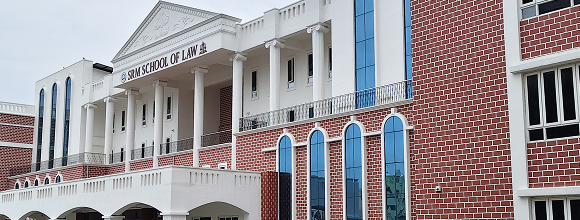
At SRM School of Law, we nurture future-ready legal professionals through academic excellence, critical thinking and a commitment to justice.

National & International Conferences
Promoting scholarly discussions across diverse areas of law through multidisciplinary participation by researchers, academicians, practitioners, and policy experts.
Faculty Development Programmes
Building academic excellence through programmes focusing on emerging legal domains, innovative pedagogy, research methodologies, artificial intelligence, and interdisciplinary learning.
Lexposium
A flagship legal conclave that brings together legal luminaries, policymakers, judges, senior advocates, academicians, and industry leaders to deliberate on emerging legal challenges and contemporary developments shaping the future of law.
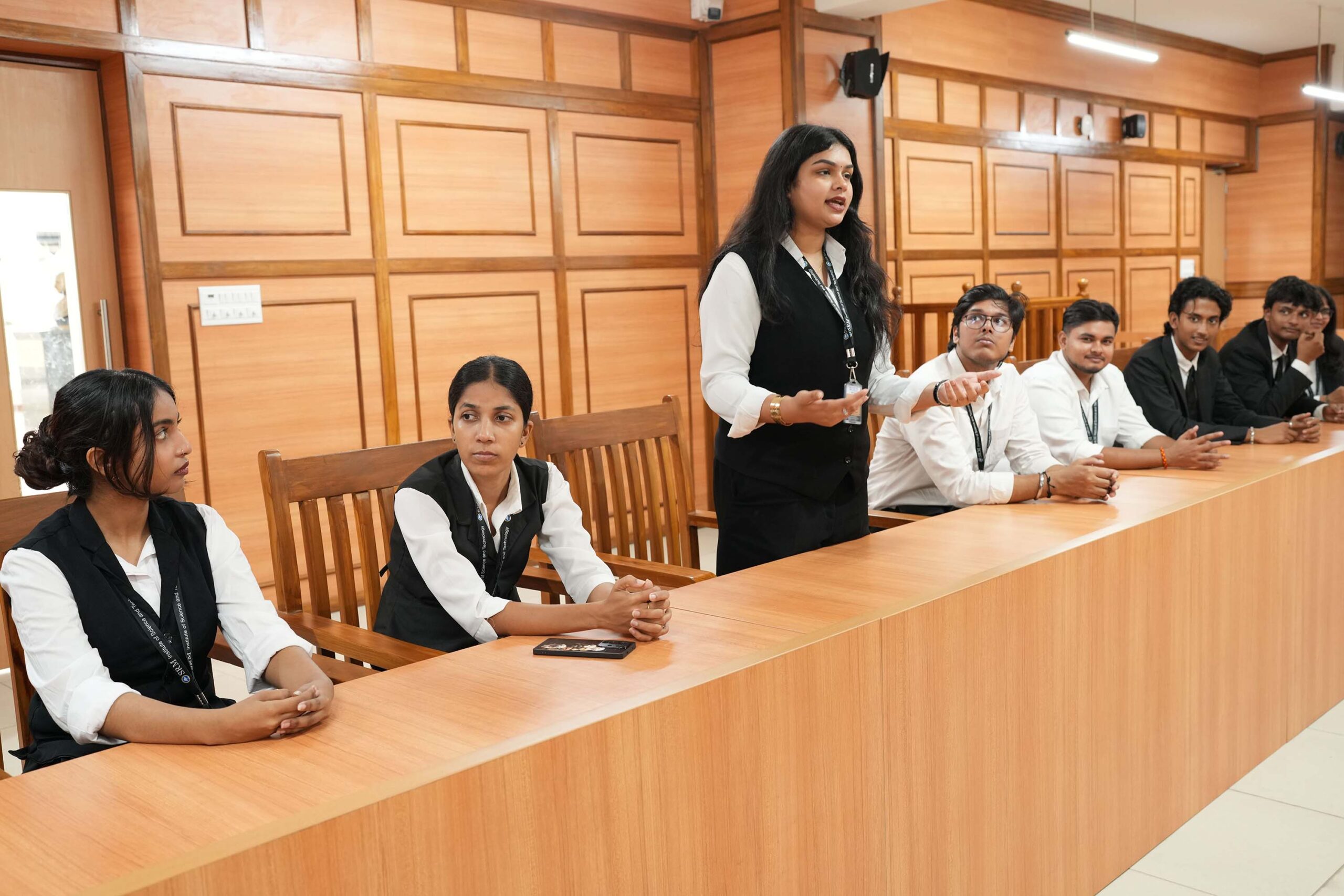
At SRM School of Law, practical advocacy is not merely an extracurricular activity; it is a core pillar of our pedagogical philosophy. The Moot Court Committee (MCC) functions as a high-intensity incubator for aspiring litigators, bridging abstract classroom jurisprudence with the rigorous demands of appellate and trial practice.
Through simulated court proceedings, specialised training modules, and national-level competitions, students hone their analytical reasoning, statutory interpretation, written drafting, and oral argument skills under realistic judicial pressure. The school conducts two national-level moot court competitions each year regularly and also participates in:
National Moot Court Competitions
Mediation Competitions
Trial Advocacy
Negotiation Exercises
Client Counselling Competitions
Collaborative Framework: Conducted in strategic collaboration with the National Foundation for Corporate Governance (NFCG) under the aegis of the Ministry of Corporate Affairs (MCA), Government of India.
Substantive Focus: Focuses on modern corporate and financial law issues, including algorithmic trading liability, fintech compliance, market manipulation, and cross-border regulatory oversight.
Judicial Bench: Benches feature sitting and retired judges from the High Courts and tribunals (such as NCLAT), along with senior partners from premier law firms (e.g., Khaitan & Co, Chugh Universal Legal), providing students with direct feedback from top-tier practitioners.
Pioneering Access to Justice: A ground-breaking national initiative designed to break linguistic barriers in formal legal education and promote vernacular advocacy in regional courts.
Complex Modern Compromise: Challenges law schools across India to argue sophisticated socio-legal and financial controversies such as predatory digital lending applications, cyber-fraud, and regional banking statutes entirely in Tamil.
Impact: Strengthens grassroots litigation capabilities and prepares students for effective practice in state high courts and subordinate judiciaries where regional language proficiency is paramount.
Foundational Bootcamp: A structured, hands-on onboarding programme conducted annually for incoming first-year undergraduate and postgraduate law cohorts.
Core Skill Sets: Instructs students in: Systematic legal research using platforms like SCC Online, Manupatra, and Westlaw. Structure, formatting, and issue-framing for appellate memorials. Courtroom etiquette, time management, and handling judicial bench interruptions.
Peer Mentorship: Connects senior student advocates with freshers to offer continuous feedback and guidance throughout their first internal competitive rounds.
Judicial Mentorship: Regular intensive masterclasses led by distinguished members of the judiciary, including retired District Judges and Judicial Members of the National Company Law Tribunal (NCLT).
Practical Drafting Mastery: Focuses on the mechanics of civil and criminal drafting ranging from plaints, written statements, and bail applications to interlocutory applications and commercial conveyancing.
Bench-Side Perspective: Exposes students to real-world judicial expectations, teaching them how to build persuasive oral arguments, manage case files, and adhere strictly to court rules.
Guest Lecture Series
Legal Awareness Programmes
Workshops
Research Seminars
Campus life at SRM School of Law combines legal education with international exposure, internships, student clubs, cultural activities, sports, community engagement, competitions, leadership opportunities, and professional events. Students can participate in activities that support academic, personal and professional development.
Yes. SRM School of Law provides opportunities for international exposure through student exchange programmes, overseas internships, international conferences, UK-focused academic pathways, international mediation and ADR initiatives, and global research engagement.
Students have opportunities to engage with international universities through student exchange programmes, academic collaborations, overseas internships and exposure to different legal systems.
International opportunities include global conferences, academic collaborations, student exchange programmes, overseas internships, UK-focused academic pathways, international ADR initiatives and research collaborations.
Yes. The school provides UK-focused academic and professional opportunities, including Solicitors Qualifying Examination (SQE) 1 and 2 training through the London Centre for Innovation, as stated in the institutional information.
Yes. Students can gain exposure to international mediation and Alternative Dispute Resolution (ADR) through interactions with international mediation experts, training initiatives, Med-Arb competitions and research collaborations.
Yes. Internships form an integral part of legal education at SRM School of Law and allow students to apply classroom learning to legal practice, courts, government institutions, regulatory bodies, corporations, law firms, human-rights organisations and ADR institutions.