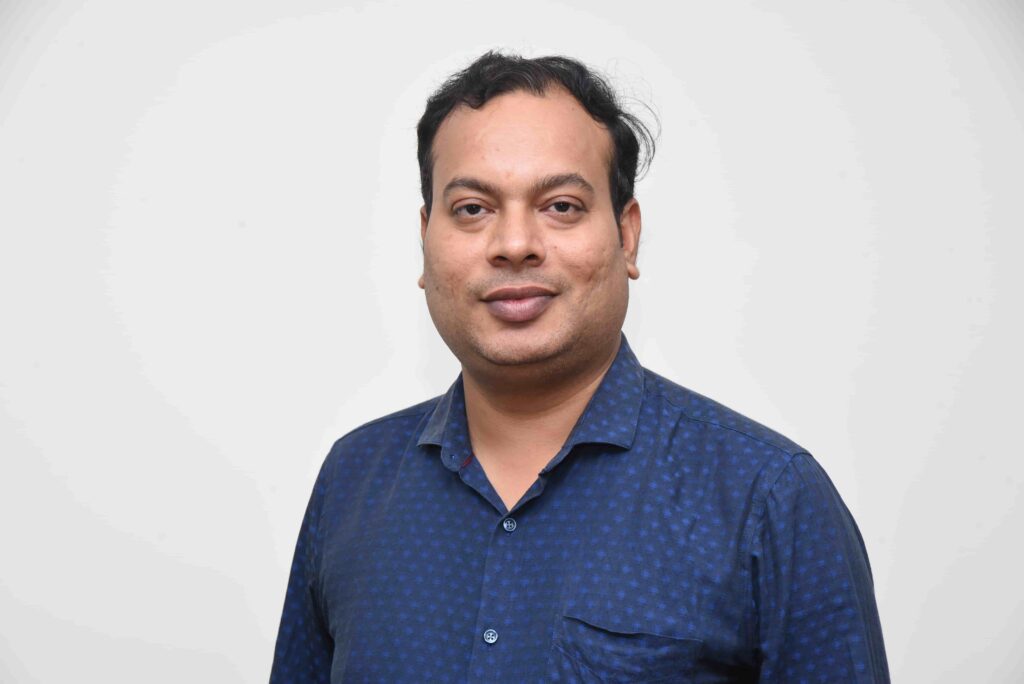
Mr. Alankar Upadhyay is a distinguished legal academic and practitioner whose professional trajectory encompasses legal practice, competitive legal education, university teaching, academic administration, and scholarly research. His multidisciplinary professional experience reflects a sustained engagement with legal pedagogy, institutional governance, student mentorship, and the advancement of legal scholarship.
Currently, Mr. Upadhyay serves as an **Assistant Professor of Law at SRM School of Law, SRM Institute of Science and Technology, Chennai**, where he is engaged in teaching, academic mentoring, curriculum delivery, assessment, and research activities. His academic responsibilities include preparing instructional materials, conducting internal assessments, evaluating answer scripts, and facilitating students’ intellectual and professional development. He serves as a member of the **Internal Examination Committee**, contributing to the effective planning, coordination, and administration of institutional examination processes. He is also a member of the **Anti-Ragging Squad**, participating in institutional initiatives directed towards maintaining a safe, inclusive, and conducive academic environment. His contributions extend to academic programme coordination, special lectures, student mentoring, admissions-related activities, and the pursuit of doctoral research and scholarly publications.
Prior to joining SRM Institute of Science and Technology, he served as an **Assistant Professor of Law at Law College Dehradun, Uttaranchal University, Dehradun**, where he contributed to undergraduate legal education through classroom instruction, academic guidance, and student engagement. His responsibilities encompassed the effective delivery of legal curricula, the facilitation of conceptual understanding of legal principles, and participation in institutional academic initiatives. During his academic career, he also served as a **member of the Library Committee and the Centre of Commercial Law**, contributing to academic and institutional activities associated with scholarly resources and commercial law.
Earlier, Mr. Upadhyay was associated with the **Institute of Law, Nirma University, Ahmedabad**, as an **Assistant Professor of Law**. In this capacity, he undertook teaching and academic mentoring responsibilities, supporting students in developing a systematic understanding of legal doctrines, statutory frameworks, and jurisprudential principles. His experience at the institution further strengthened his competencies in higher legal education, curriculum delivery, academic engagement, and the cultivation of analytical and research-oriented approaches to legal study.
Before entering full-time university academia, he worked as a **Part-time Faculty Member and Mentor at IMS Learning Resources Pvt. Ltd.**, where he was involved in teaching and mentoring aspirants preparing for law entrance examinations, including the Common Law Admission Test (CLAT). His responsibilities included facilitating students’ understanding of legal aptitude and related examination components, strengthening their analytical abilities, and guiding them in their preparation for competitive legal education. This experience provided him with valuable insights into entrance examination preparation, structured instructional methodologies, and student-centred mentoring.
At the outset of his professional career, Mr. Upadhyay practised as an **Advocate at the District and Sessions Court in Uttar Pradesh**, gaining practical exposure to courtroom proceedings, legal procedures, statutory interpretation, and the application of substantive and procedural law. His experience in legal practice established an important practical foundation for his subsequent academic engagement, enabling him to approach legal education with an appreciation of the relationship between legal theory, judicial processes, and the administration of justice.
Collectively, his professional experience across legal practice, competitive examination mentoring, and higher education has enabled him to develop a comprehensive perspective on legal education and professional training. His continuing engagement with teaching, institutional responsibilities, academic research, and scholarly development reflects his commitment to advancing legal scholarship, strengthening pedagogical practices, and contributing meaningfully to the academic and professional development of future legal practitioners.