Shape the Law.
Shape the Future.
At SRM School of Law, we nurture future-ready legal professionals through academic excellence, critical thinking and a commitment to justice.

At SRM School of Law, we nurture future-ready legal professionals through academic excellence, critical thinking and a commitment to justice.

SRM School of Law goes beyond textbooks. The curriculum emphasises real-world scenarios through case studies, simulations, and client-counselling exercises, so students are practice-ready from day one supported by a dedicated mock court set up to run proceedings in a professional, contemporary manner.
At SRM School of Law, Moot Court training provides students with an immersive experience in courtroom advocacy, combining rigorous legal research with practical argumentation and professional courtroom skills.
The school conducts National Moot Court Competitions in both English and Tamil, providing students with a distinctive platform to engage with contemporary legal issues and develop advocacy skills in both languages. These competitions bring together law students from institutions across the country and encourage academic exchange, constructive competition, and exposure to diverse approaches to legal reasoning.
Students participate in the complete process of simulated litigation, from analysing the proposition and researching applicable laws to preparing written submissions and presenting oral arguments before a panel of judges.
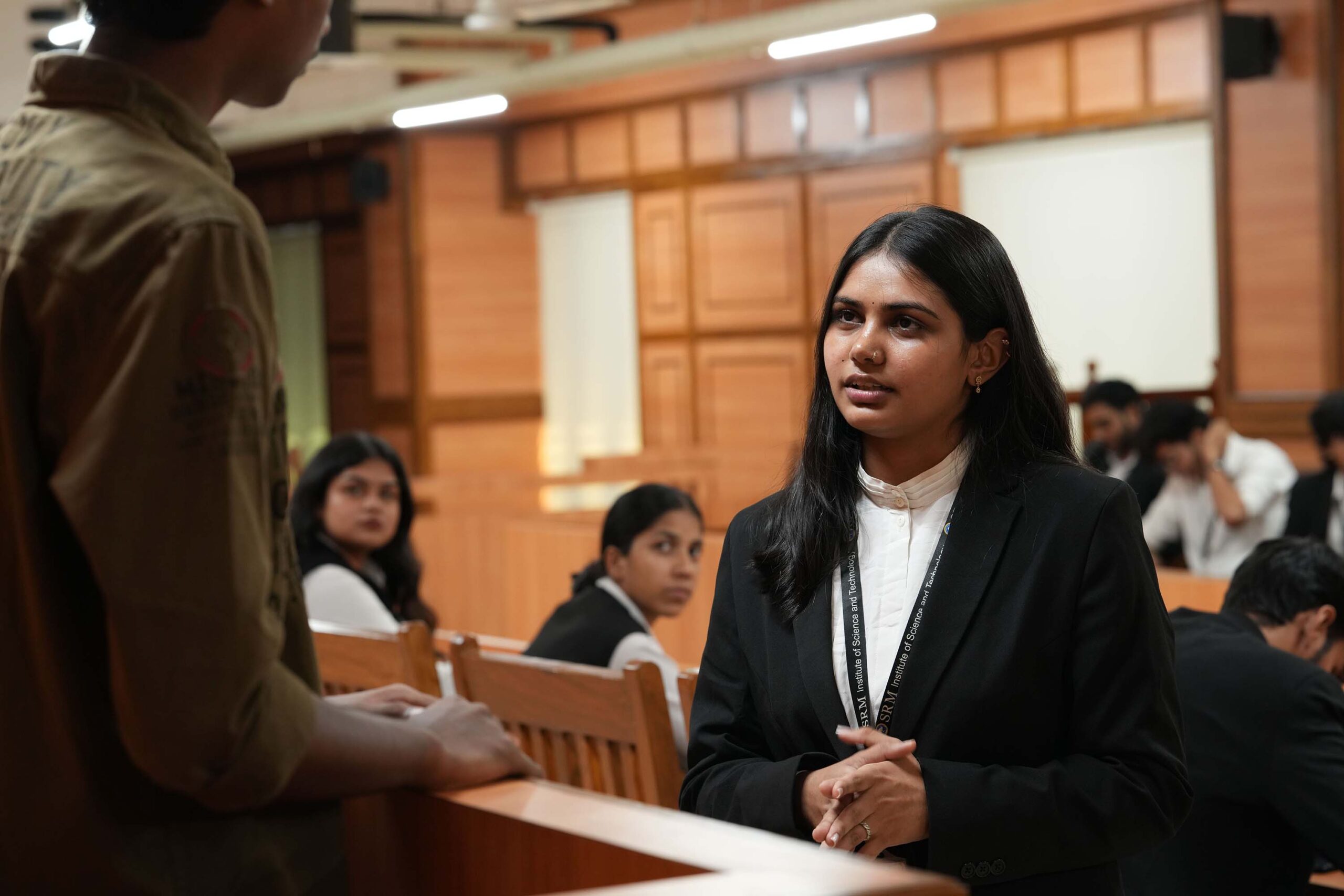
Moot Court Induction Programme
The school also introduced first-year students to moot court practice through a dedicated induction programme. Students were trained in legal research, memorial drafting, courtroom advocacy and oral submissions, while also being familiarised with moot court procedures, etiquette and competition formats.
At SRM School of Law, Mock Trials form an integral part of experiential legal education and are conducted as part of the students’ academic assessments. Designed to replicate actual courtroom proceedings, these exercises enable students to apply legal principles, procedural knowledge, and advocacy skills in a realistic setting.
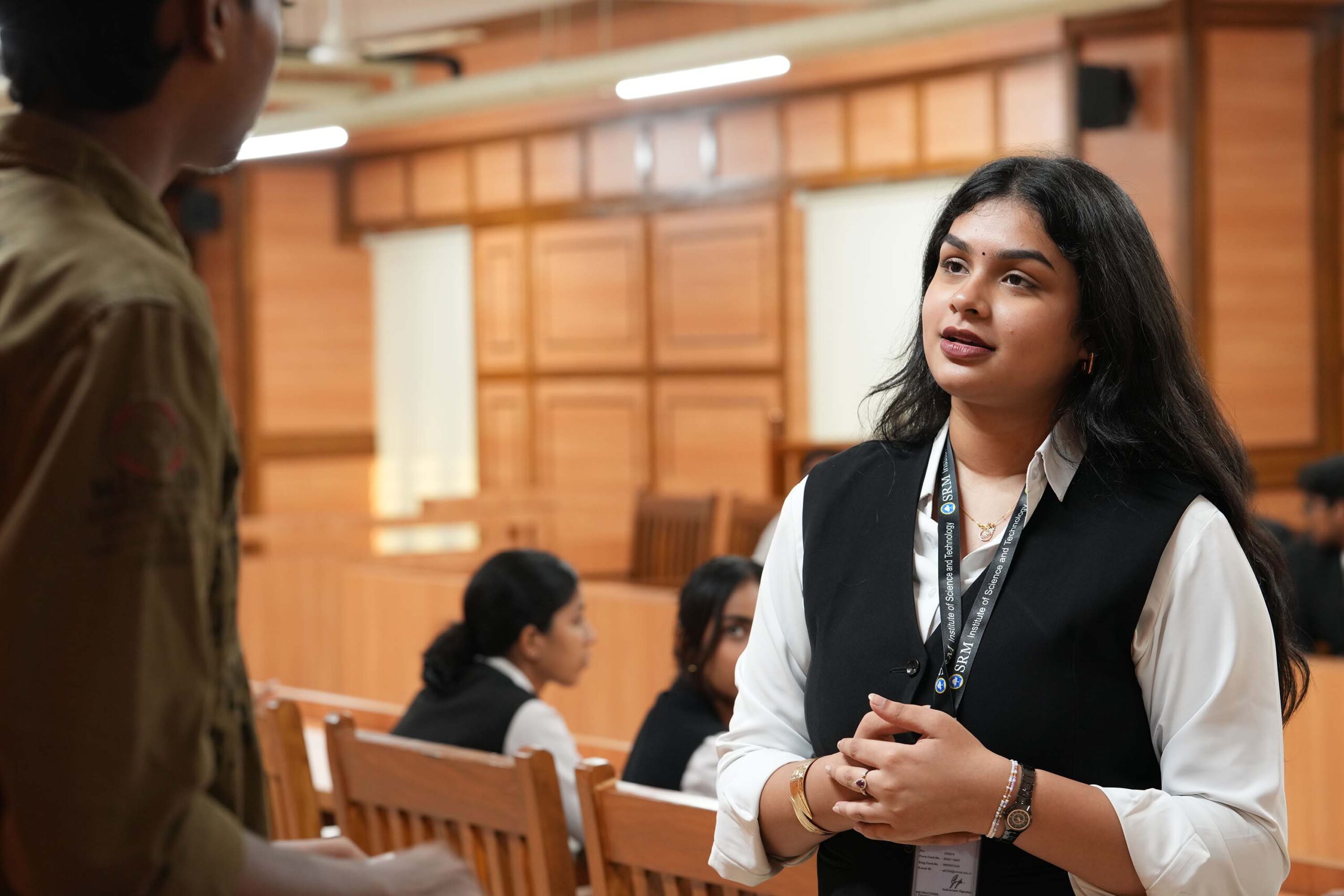
At SRM School of Law, Client Counselling provides students with practical exposure to one of the most important aspects of legal practice, the ability to understand a client’s concerns, identify legal issues, and provide appropriate legal guidance with professionalism and empathy.
As part of their academic assessments, students participate in simulated client-counselling sessions where they assume the roles of legal practitioners and clients. Students are required to understand the facts presented, identify the relevant legal issues, explore possible courses of action, and communicate legal advice clearly and effectively.
The exercises are designed to reflect real-world client interactions, enabling students to develop professional judgement, empathy, ethical awareness, and effective communication skills.
Through Client Counselling as an assessed component of legal education, SRM School of Law prepares students to approach client interactions with competence, confidence, integrity, and a strong sense of professional responsibility.

At SRM School of Law, Negotiation Competitions provide students with practical training in the art of resolving legal disputes through constructive dialogue, strategic communication, and collaborative problem-solving. The activity introduces students to the skills required to negotiate effectively while protecting the interests of their clients.
Students work on simulated legal disputes and represent the interests of different parties. They analyse the facts, identify the interests and priorities of their clients, develop negotiation strategies, and engage in structured negotiations to arrive at mutually acceptable solutions.
The competitions provide students with an opportunity to think beyond adversarial litigation and explore practical, interest-based approaches to dispute resolution. Through structured exercises, expert feedback, and competitive simulations, students gain confidence in handling complex negotiations and representing clients effectively.
The Negotiation Competition is an important component of experiential learning at SRM School of Law, helping students develop the professional judgement, communication skills, strategic thinking, and collaborative approach essential for modern legal practice.
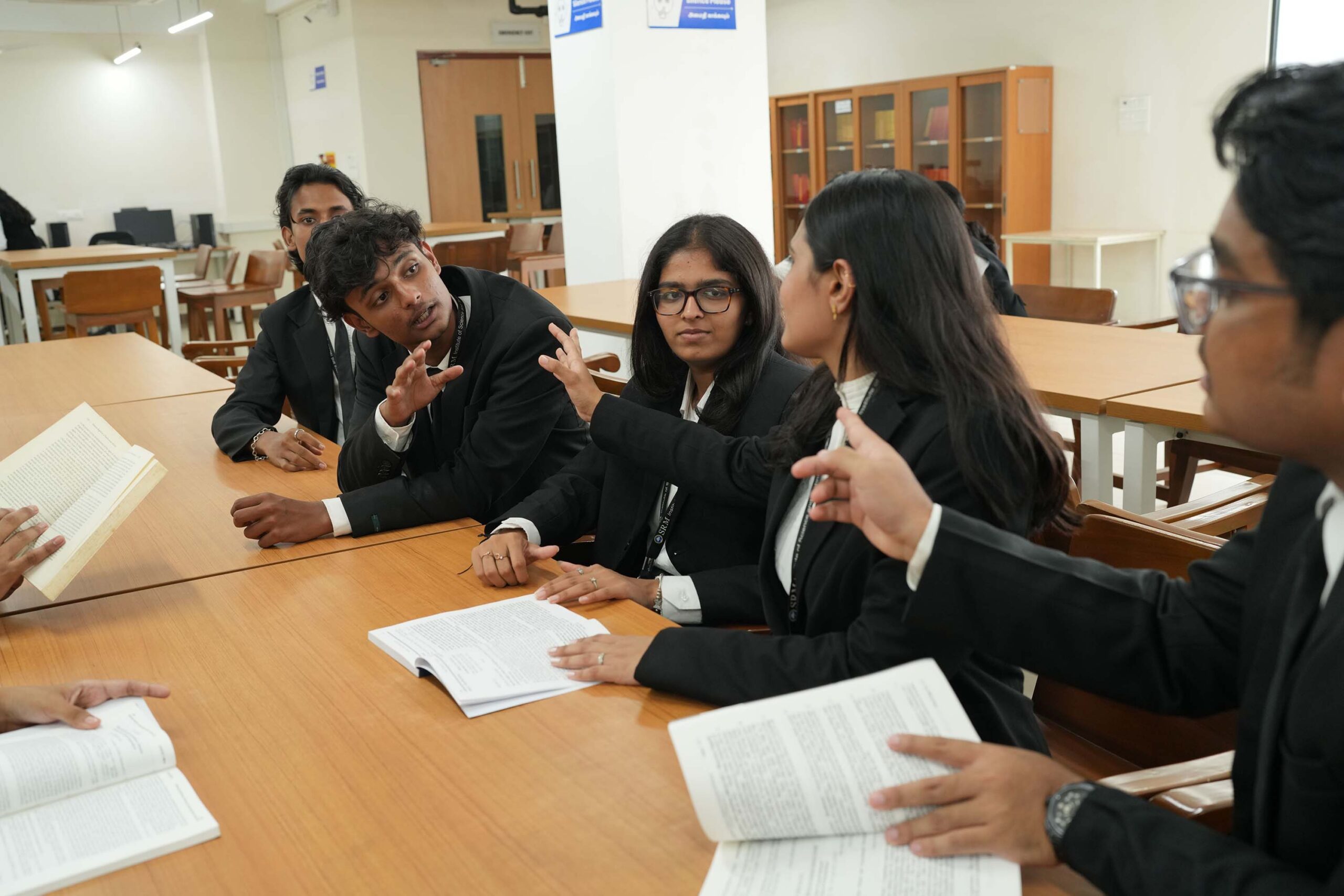
SRM School of Law provides practice-oriented training in negotiation, communication, mediation techniques, ethics, and dispute resolution, equipping students with practical skills for alternative dispute resolution.
A 48-hour Mediation Training Programme, conducted in collaboration with the International Mediation Organisation, Chennai, provides hands-on exposure to mediation processes, communication strategies, ethical practices, and effective dispute-resolution techniques.
Through such initiatives, students develop the practical competence, professional judgement, and communication skills required to facilitate constructive resolution of disputes.
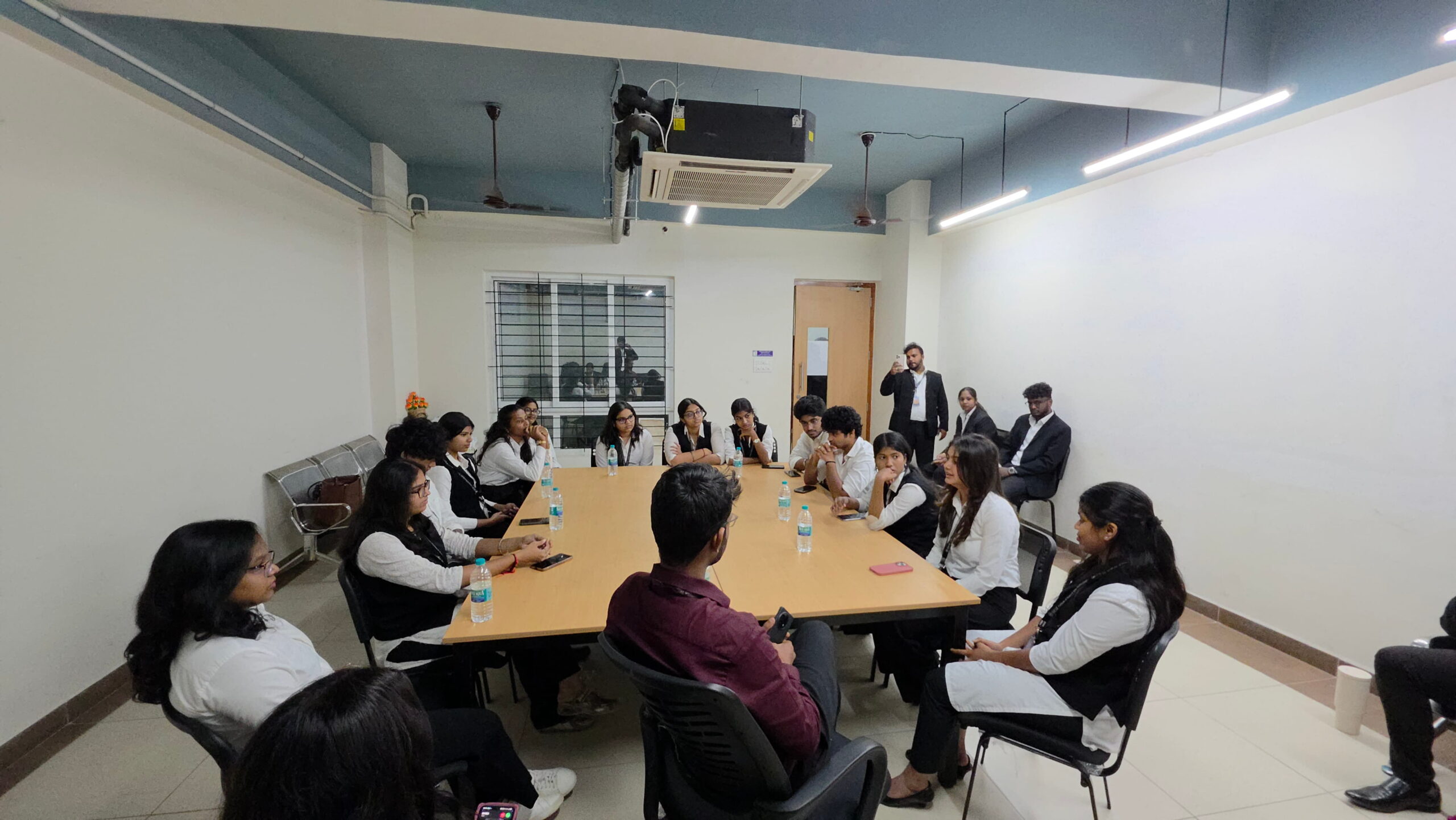
SRM School of Law provides students with practical exposure to arbitration and alternative dispute resolution, enabling them to understand arbitration procedures, legal frameworks, and dispute-resolution strategies.
Through training programmes, simulations, expert sessions, and practical exercises, students develop skills in arbitration procedure, case analysis, advocacy, legal drafting, and dispute resolution.
These initiatives help students build practical competence and professional confidence in handling arbitration matters and understanding contemporary mechanisms of dispute resolution.

SRM School of Law provides students with hands-on training in legal drafting, focusing on clarity, precision, legal reasoning, and professional language. Students receive practical exposure to drafting legal notices, pleadings, contracts, affidavits, petitions, and other professional legal documents.
Through such practice-oriented initiatives, students develop the drafting skills and professional competence required for effective legal practice.
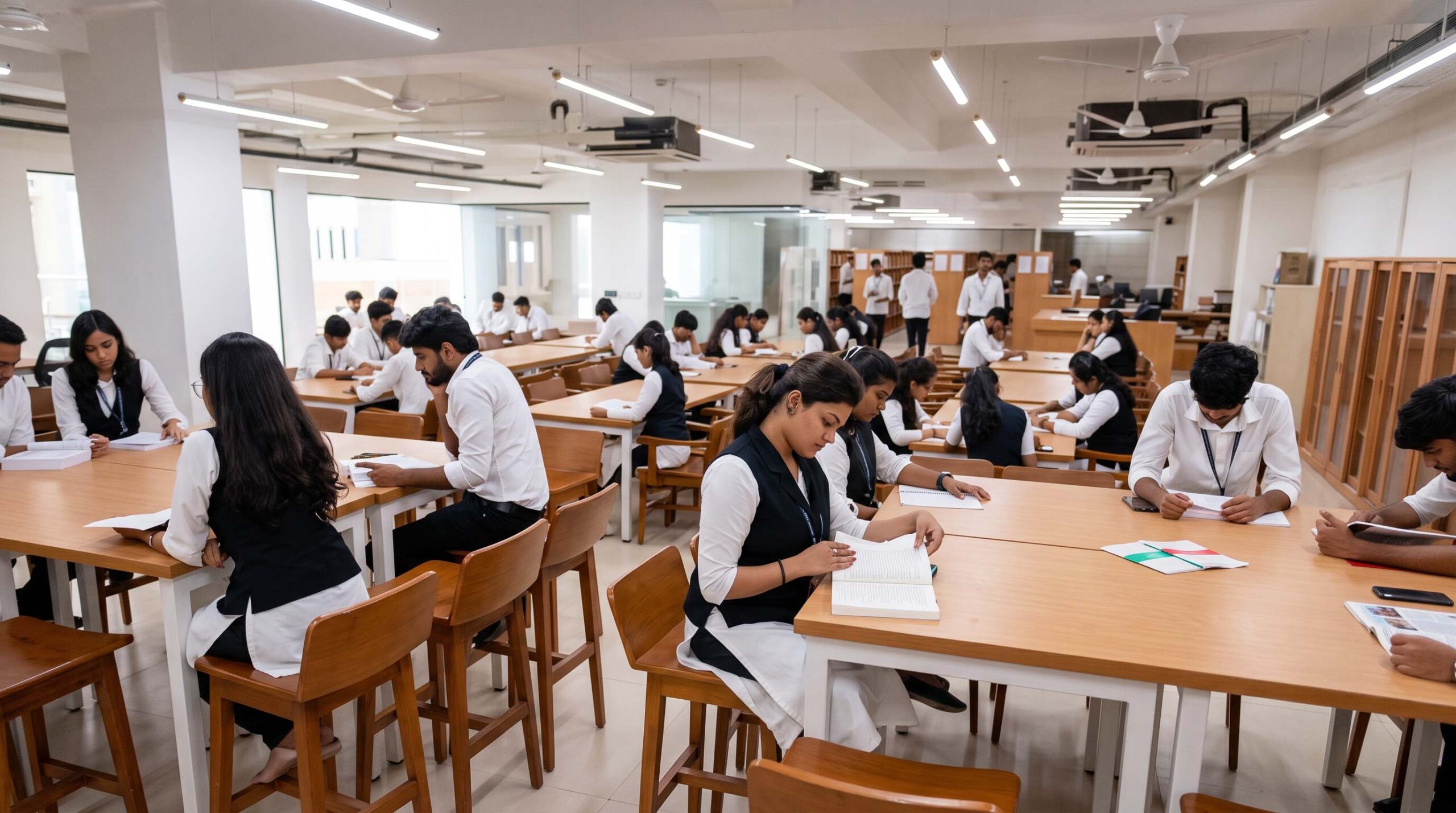
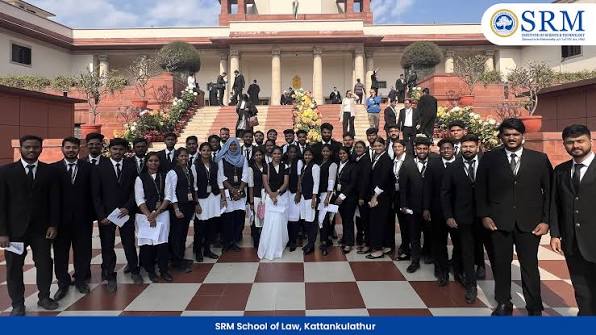
At SRM School of Law, internships are a mandatory component of legal education, with students required to undertake an internship every semester. This ensures continuous and progressive exposure to professional legal practice throughout their academic journey.
Students have undertaken internships with a wide range of courts, law firms, government bodies, statutory authorities, corporate organisations, NGOs, and other legal institutions. Many students have gained valuable exposure through internships with institutions such as the National Human Rights Commission (NHRC) and the Central Bureau of Investigation (CBI), among other reputed organisations.
These experiences enable students to apply classroom learning to real-world legal work while developing legal research, drafting, advocacy, communication, professional ethics, and problem-solving skills.
The semester-wise internship requirement, combined with exposure to diverse legal institutions, ensures that students graduate with sustained practical experience and a strong understanding of professional legal practice.

SRM School of Law frequently conducts national-level and practice-oriented workshops that complement classroom learning and strengthen students’ professional and research capabilities. These programmes bring together students, scholars, academicians, and legal professionals for focused learning and expert interaction.
It conducts programmes for Ph.D. scholars and LL.M. students on legal research methodology, covering theoretical foundations, research techniques, data collection, analysis, and academic research practices. Distinguished resource persons from leading universities contribute to these programmes, strengthening participants’ research capabilities. Dedicated training programmes guide students and research scholars in developing and publishing quality legal research, including research intended for Scopus-indexed journals.
Through these workshops and training programmes, SRM School of Law promotes continuous professional development, research excellence, and practical learning alongside formal legal education.
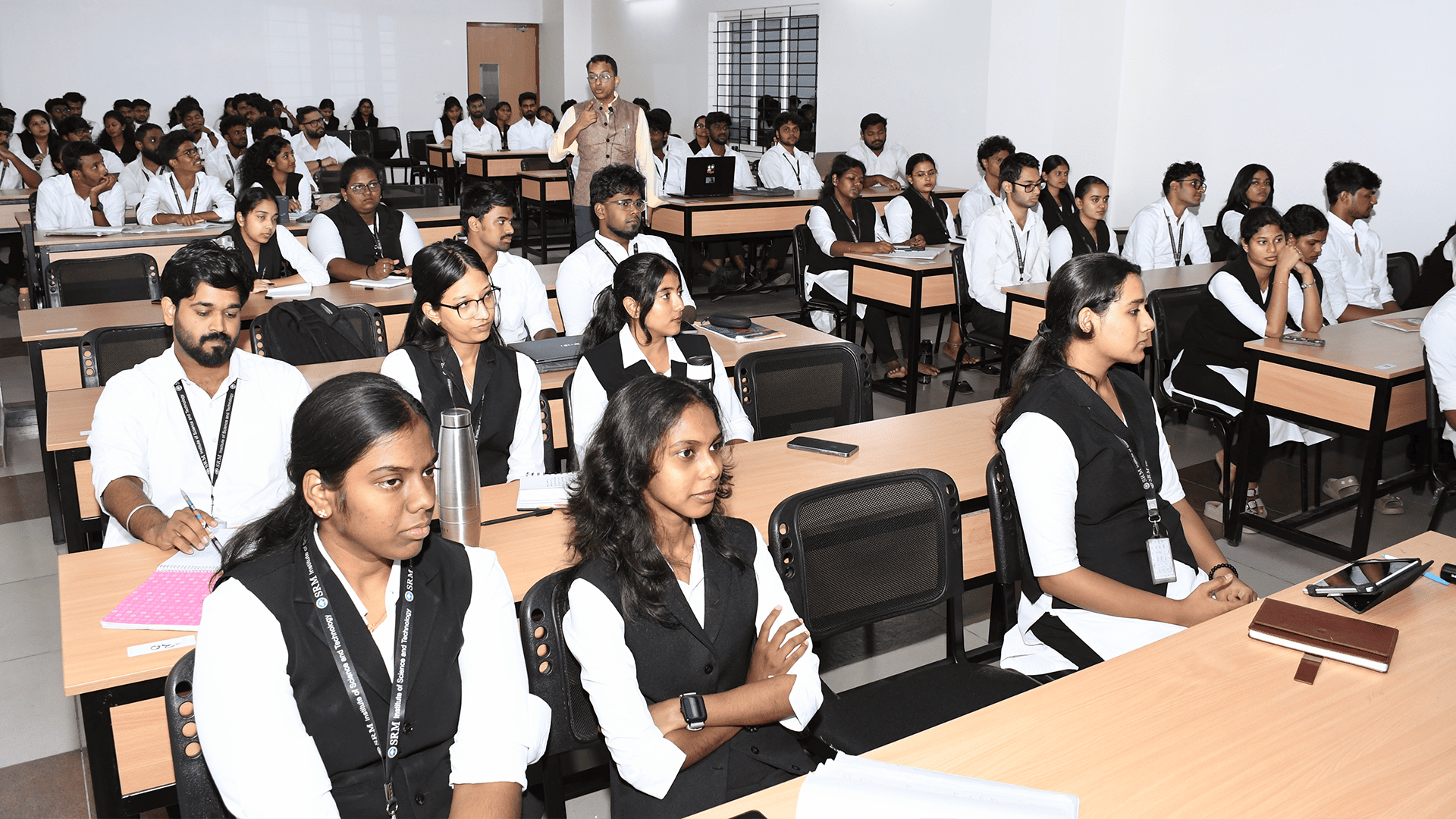
SRM School of Law regularly organises national and international conferences that provide students and research scholars with opportunities to engage with contemporary legal issues, emerging areas of law, and interdisciplinary perspectives.
The conferences bring together academicians, judges, legal practitioners, policymakers, researchers, and students, creating a platform for scholarly discussion, knowledge exchange, and professional networking.
Through paper presentations, expert sessions, panel discussions, and interactive deliberations, students gain exposure to current legal developments, research perspectives, and professional insights, strengthening their academic and research capabilities.
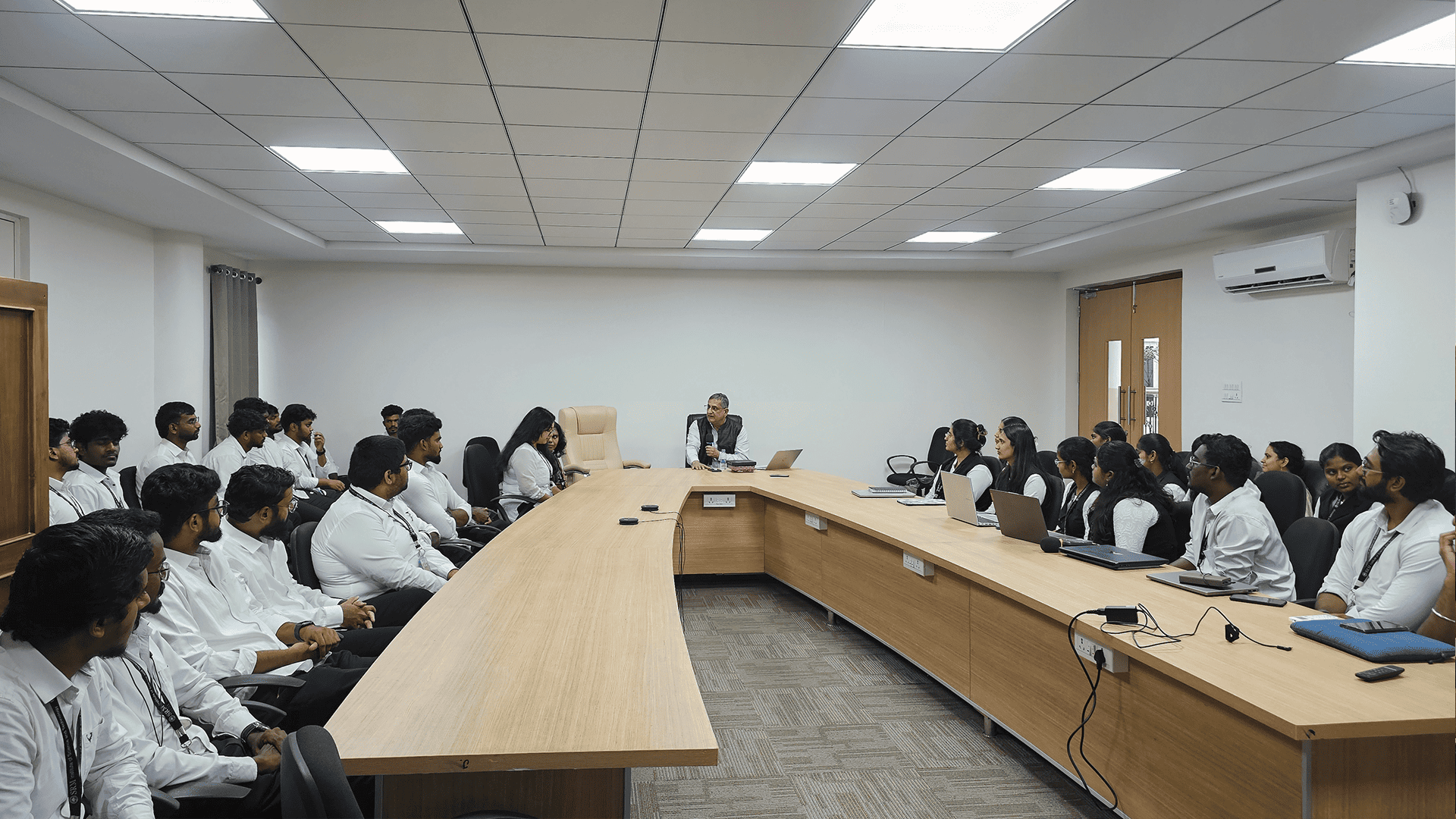
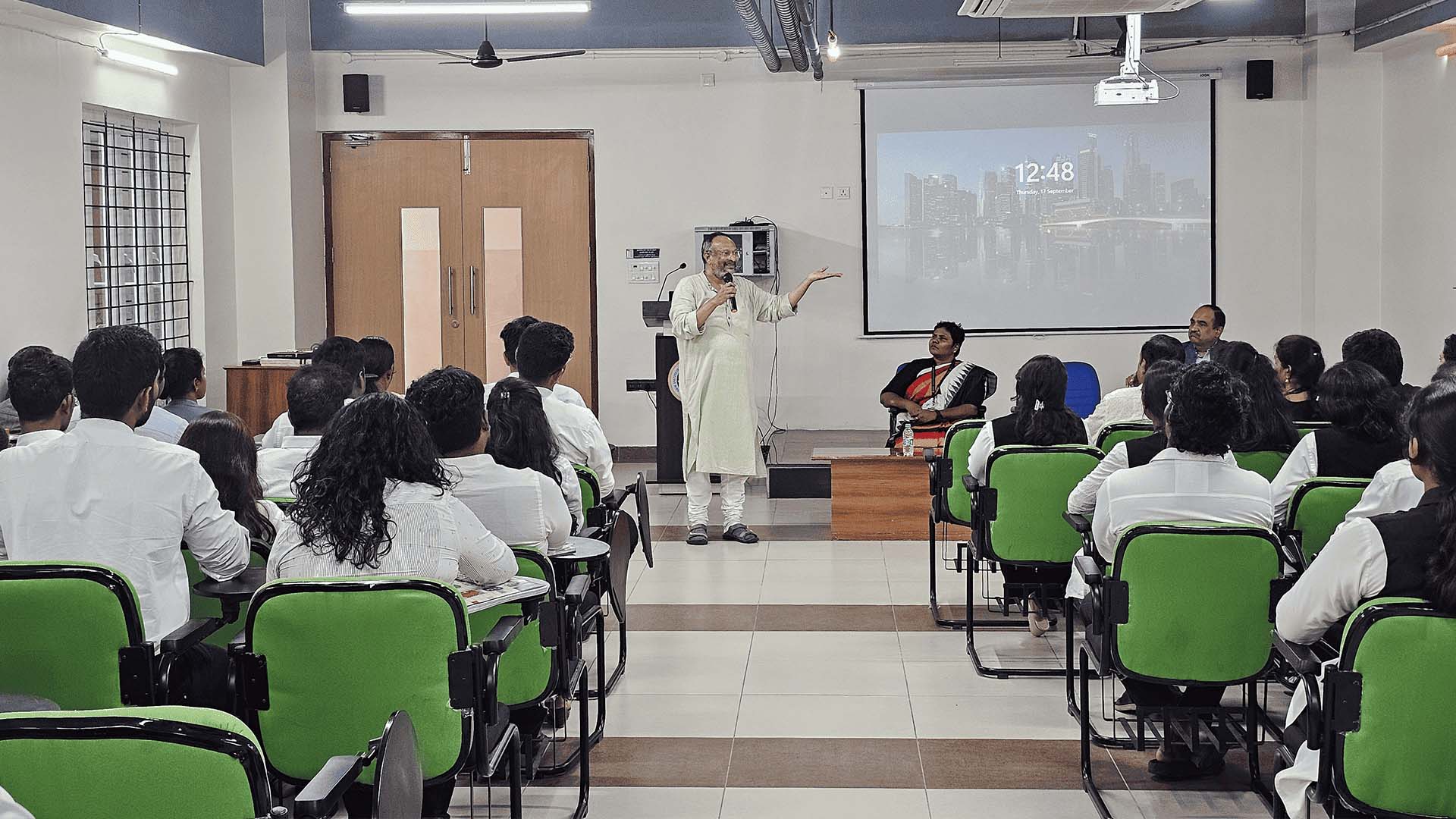
SRM School of Law regularly conducts expert lectures by judges, senior advocates, legal practitioners, academicians, policymakers, and other distinguished professionals to connect classroom learning with current developments in legal practice.
These sessions provide students with insights into contemporary legal issues, courtroom practice, professional ethics, emerging areas of law, and career opportunities.
Through direct interaction with experienced professionals, students gain practical perspectives, industry exposure, and a deeper understanding of the legal profession.
Beyond the curriculum, the school runs workshops on communication skills, legal ethics, and leadership alongside character-building initiatives and pro bono legal work that instill a strong sense of ethical responsibility in every student.