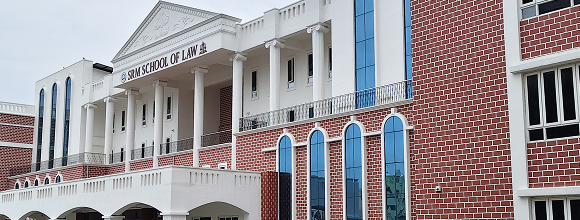
At SRM School of Law, we nurture future-ready legal professionals through academic excellence, critical thinking and a commitment to justice.
Research & Practice
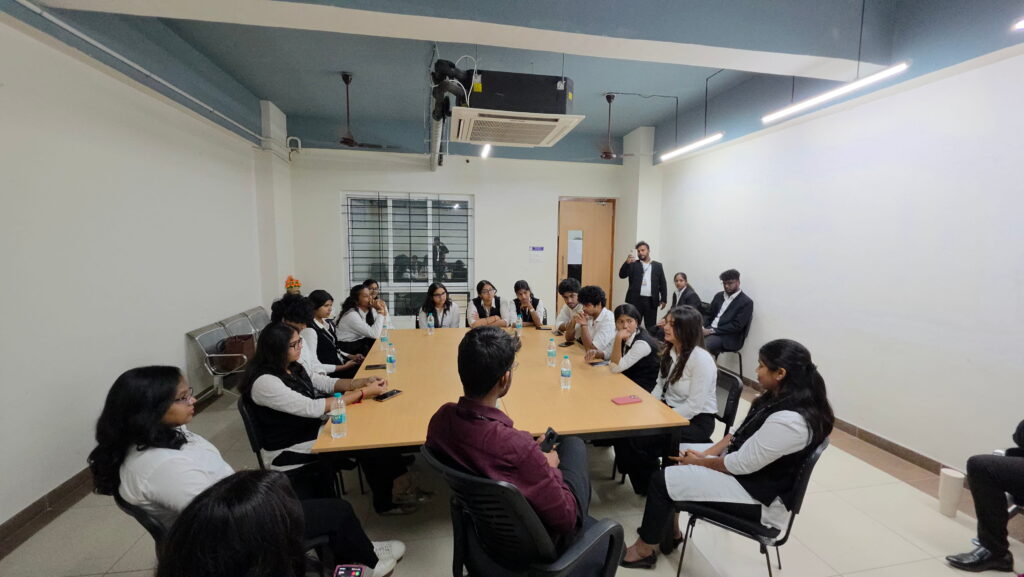
At SRM School of Law, legal education extends beyond the classroom to the communities that law ultimately serves. The school seeks to develop socially responsible legal professionals by combining legal-aid initiatives, community outreach, legal awareness programmes, and experiential engagement with vulnerable and underserved groups.
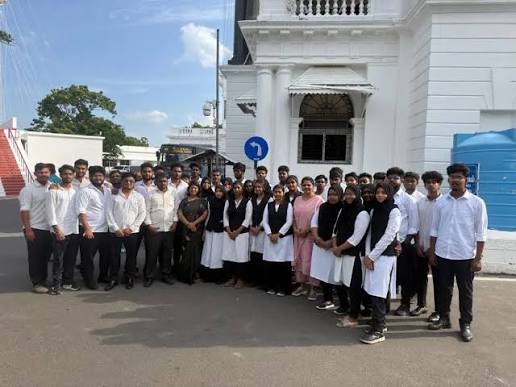
The school’s Legal Aid Committee provides students with opportunities to understand access to justice in practice. Students have participated in legal-aid activities and visited the Chengalpattu District Court to observe Lok Adalat proceedings, including adoption matters and motor accident claims settlements. These experiences expose students to conciliatory dispute resolution, alternative dispute resolution mechanisms, and the practical importance of accessible, speedy and cost-effective justice.
01
Legal Aid Camp
Students participate in legal-aid initiatives focused on access to justice.
02
Lok Adalat Visit
Students gain practical exposure to Lok Adalat proceedings and alternative dispute resolution at Chengalpattu District Court.
03
Centre for Social Justice
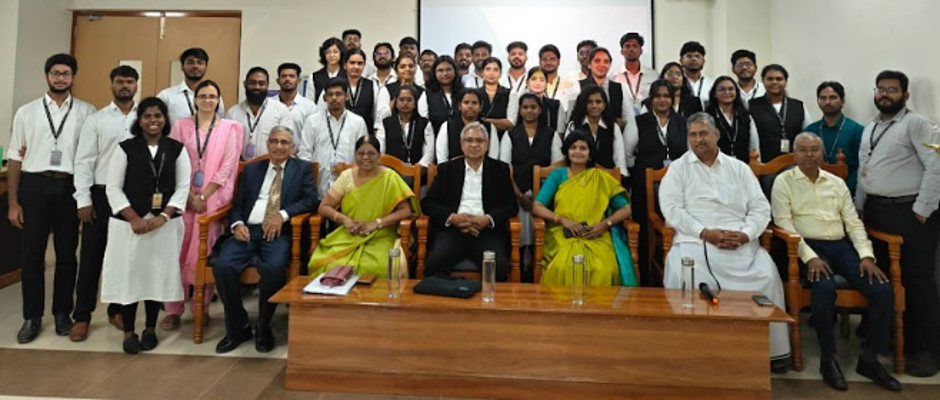
The Centre brings together students, academics, activists and policymakers to engage with issues of social justice and gender equality.
04
Elderly Week
Students visited old-age homes, interacted with residents, and identified property and welfare-related issues requiring legal assistance.
05
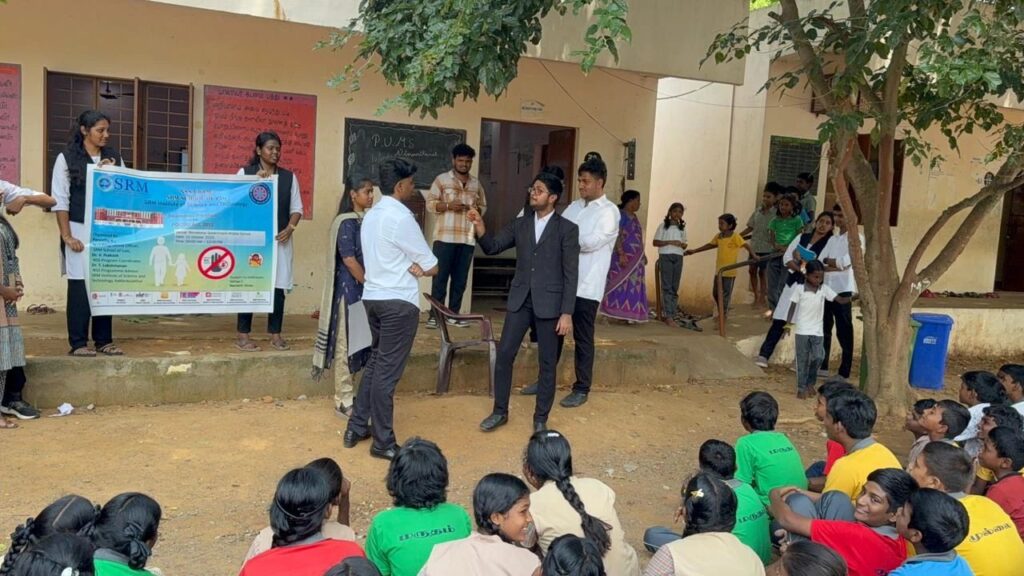
POCSO Awareness
Students conducted programmes on child rights and protection under the POCSO Act, including an outreach programme at PUMS School, Ninnakarai.
06
Women’s Safety
Programmes address women’s safety, cybercrime and digital security, including practical training on emergency-response applications.
07
NSS Community Service
Students contribute through initiatives such as blood donation and beach-cleaning drives, promoting civic and environmental responsibility.
At SRM School of Law, legal education extends far beyond academic rigour to fulfil a core constitutional mandate, ensuring equal access to justice and serving vulnerable communities. Operating under Article 39A of the Constitution of India, the Legal Aid Clinic functions as an active bridge between classroom theory and community-centred advocacy. Through strategic institutional partnerships, field immersion, and alternative dispute resolution (ADR) training, students gain firsthand experience in clinical lawyering while upholding social responsibility. Through this legal aid clinic
Direct Field Observation: Students undergo structured, experiential visits to District Lok Adalat (such as the Chengalpattu District Court) to observe court-annexed dispute resolution mechanisms in real time.
Motor Accident Claims (MCOP): Understanding assessment, compensation calculations, and insurance negotiations.
Matrimonial & Family Disputes: Observing sensitive conciliation techniques in spousal maintenance, custody, and restitution.